.svg)

What is Digital Workplace Experience? | Definition & Benefits | 2026 Guide
.svg)
.svg)
Download our comprehensive framework with 20+ Employee Engagement Metrics, and action planning worksheets.
Download E-bookWhat is Digital Workplace Experience? Definition & Benefits | Ultimate Guide 2026
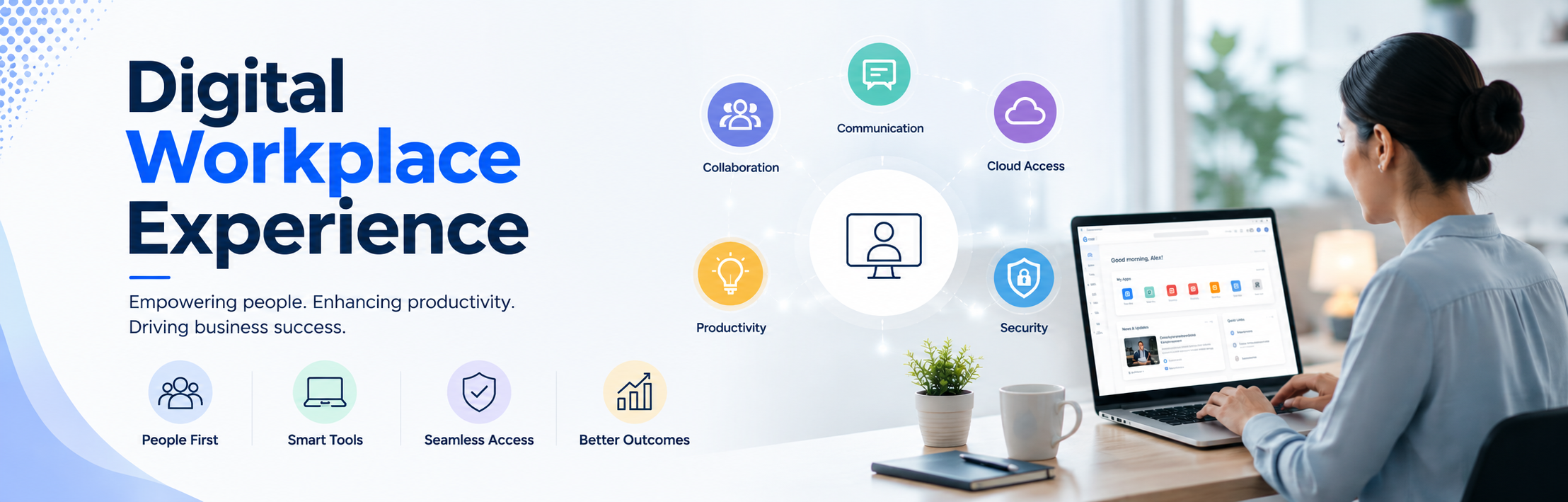
A strong digital workplace experience means employees can do their best work without being slowed down by confusing tools, fragmented communication, weak manager alignment, or a lack of voice. In simple terms, it is the quality of the day-to-day experience in the workplace when work happens through digital systems, collaboration platforms, HR tools, workflows, analytics and employee feedback channels.
For HR leaders, CHROs, CEOs and managers, the question is no longer only “what is workplace experience?” The better question in 2026 is: How do employees experience work when culture, technology, leadership and communication are all mediated through digital touchpoints?
Digital workplace experience matters because it directly affects productivity, engagement, retention, collaboration, trust, recognition, wellbeing, and manager effectiveness. ServiceNow defines digital employee experience as the way employees perceive and interact with digital tools, systems and processes at work, while Rightpoint frames it as the total sum of digital interactions between an employee and their work environment.
The best organisations do not treat this as an IT project. They treat it as a business, people and culture priority.
1. What is Digital Workplace Experience?
Digital workplace experience is the complete employee experience created by the tools, systems, workflows, communication channels, feedback mechanisms and cultural signals that shape how people get work done digitally.
It includes the obvious things: laptops, HR portals, collaboration tools, intranet, productivity platforms, learning systems, helpdesk tools and performance systems. But it also includes the less visible parts of work: whether employees feel heard, whether managers act on feedback, whether teams collaborate across locations, whether recognition is timely, and whether people trust that leadership decisions are based on real employee insight rather than assumption.
SAP describes the digital workplace as a way to deliver positive people experience, increase engagement and productivity, and improve business agility. That is a useful starting point, but leaders should go further. A digital workplace is not just a place where tools exist. It is where work, culture and employee expectations meet.
A good digital workplace experience answers five practical questions:
In 2026, digital workplace experience is especially important because distributed work, hybrid teams, AI adoption and multi-generational workforces have made work more complex. Employees may be in Bengaluru, Mumbai, Dubai, Singapore, London or New York, but they still expect clarity, speed, fairness, responsiveness and connection.
The takeaway is simple: digital workplace experience is not the same as having digital tools. It is the lived quality of work created by those tools and the culture around them.
2. Digital Workplace Experience vs Employee Experience vs Digital Employee Experience
These terms are often used interchangeably, but they are not identical. Clear definitions help HR and business leaders make better investments.
Digital employee experience, often called DEX, is usually narrower and more technology-centred. For example, Nexthink describes DEX as the holistic experience employees have with the digital workplace provided by IT, including devices, applications, networks and end-user sentiment.
Digital workplace experience is broader. It asks: Are digital systems improving the way employees work, connect, perform and feel? Or are they increasing friction?
This distinction matters because many organisations invest heavily in tools but still struggle with engagement. The issue is not always the tool. Sometimes it is unclear ownership, weak adoption, poor listening, manager inconsistency, low trust or cultural mismatch.
A practical way to think about it:
Employee experience is the whole journey. Digital employee experience is the technology layer. Digital workplace experience is the operating environment where technology, culture and work design come together.
3. Why Digital Workplace Experience Matters in 2026
Digital workplace experience matters in 2026 because work has become more digital, more distributed, more data-rich and more emotionally demanding.
Gartner’s 2026 digital workplace planning guidance highlights the need to optimise workplace tools, explore GenAI and manage digital work amid budget constraints and legacy technologies. McKinsey’s 2026 State of Organizations report also points to the need for leaders to adapt to major organisational shifts affecting how companies operate and perform.
For Indian organisations, the urgency is even sharper. India is seeing fast workplace AI adoption, with ADP Research reported by Economic Times stating that 80% of Indian employees use AI tools multiple times a week and 41% use them daily. At the same time, Indian workplaces are facing rising concerns around disengagement, quiet quitting, wellbeing and employee expectations.
That creates a leadership paradox: employees are becoming more digitally enabled, but not necessarily more connected, aligned or engaged.
The digital workplace experience now influences:
The shift for 2026 is from tool adoption to experience orchestration. Leaders need to ask not only “which platforms do we use?” but “what kind of work experience are these platforms creating?”
4. Why Employee Feedback Tools Are Now Critical to Workplace Experience
An employee feedback tool is a digital platform that helps organisations collect, analyse and act on employee input across areas such as engagement, culture, wellbeing, recognition, leadership, manager effectiveness, performance and workplace experience.
It may include pulse surveys, anonymous feedback, lifecycle surveys, sentiment analysis, recognition signals, manager dashboards, action planning and analytics. The purpose is not to “run surveys”. The purpose is to help leaders understand what employees are experiencing and what needs to change.
Qualtrics notes that annual engagement surveys can miss what happens between check-ins, and that continuous feedback helps organisations track emerging topics and capture sentiment at scale. This is why employee feedback tools have become central to digital workplace experience. Work changes too quickly for once-a-year measurement.
In 2026, feedback tools matter because:
The strongest feedback systems help organisations move from assumptions to evidence. They help HR and leadership understand not only what employees say, but where patterns are forming, which teams need support, and whether interventions are working.
A good employee feedback tool is therefore part listening system, part culture health check, part engagement diagnostics platform and part decision-support system.
5. Why Organisations Need Employee Feedback Tools
Organisations need employee feedback tools because employee experience is now too complex to manage through intuition alone.
In smaller companies, leaders may believe they “know the pulse” because they speak to people often. In large and fast-growing organisations, especially across India and global markets, this becomes unreliable. Informal feedback is useful, but it is often biased towards the loudest voices, most accessible employees or most recent incidents.
Employee feedback tools solve three major leadership problems:
They also help distinguish between three concepts leaders often mix up:
Engagement vs satisfaction
Employee satisfaction is about whether people are content with aspects of work such as pay, flexibility, tools or benefits. Employee engagement is deeper. It reflects commitment, motivation, connection, discretionary effort and belief in the organisation’s direction.
A satisfied employee may not be highly engaged. They may like the benefits but feel uninspired. An engaged employee may still raise concerns because they care enough to improve things.
Culture vs climate
Culture is the deeper pattern of values, behaviours, norms and beliefs that shape how work gets done. Climate is the current mood or atmosphere in a team or organisation. A company can have a strong stated culture but a poor current climate because of leadership change, overload or uncertainty.
Measurement vs transformation
Measurement tells you what is happening. Transformation changes what happens next. A feedback tool is valuable only when it helps leaders move from data to action.
This is where many organisations fall short. They collect feedback, publish scores and stop there. Employees then become more cynical because they shared their voice but did not see change.
The practical guidance is clear: do not buy a feedback tool only to measure engagement. Use it to build a listening-to-action system.
6. Key Benefits of Employee Feedback Tools
Employee feedback tools improve digital workplace experience when they help organisations listen continuously, analyse responsibly and act visibly.
Two-way communication
The digital workplace often creates more communication but not always better communication. Employees receive updates, announcements, policy changes, leadership messages and platform notifications, but may not have meaningful ways to respond.
Feedback tools create structured two-way communication. Employees can share what is working, what is unclear, what feels unfair and what support they need. Leaders can respond with action plans, follow-ups and transparent communication.
This is especially important in India, SEA and MENA, where hierarchy and cultural norms may make employees hesitant to speak openly in public forums. Anonymous and confidential feedback channels can help surface issues that would otherwise remain hidden.
The key is to communicate back. When employees share feedback, they should hear: what was understood, what will be done, what cannot be changed immediately, and why.
Real-time sentiment insight
Real-time sentiment insight helps leaders detect shifts before they become major problems. Pulse surveys and open-text feedback can reveal early signs of burnout, manager disconnect, policy confusion, technology frustration or declining trust.
Qualtrics describes pulse surveys as shorter, more frequent check-ins that can track feedback over time and adapt to different organisational needs. This makes them useful for fast-moving workplaces where quarterly or annual surveys may be too slow.
For example, if an organisation rolls out a new performance framework, a feedback tool can show whether employees understand it, whether managers are explaining it consistently, and whether certain teams are experiencing anxiety.
The value is not in “more data”. The value is faster learning.
Continuous performance improvement
Performance does not improve only through performance reviews. It improves when employees have clarity, feedback, psychological safety, recognition, manager support and tools that remove friction.
Employee feedback tools can show where performance blockers exist. These may include unclear priorities, poor cross-functional coordination, slow decision-making, weak manager coaching, lack of role clarity or inadequate learning support.
When feedback is connected to performance and people analytics, leaders can identify which cultural conditions support high performance and which conditions reduce it.
The best use case is not to monitor individuals. It is to improve the system around teams.
Engagement and retention
Employee engagement and retention are strongly influenced by whether people feel heard, valued, supported and fairly treated. Feedback tools help organisations identify the drivers of engagement and the risk signals behind attrition.
This is particularly important for Indian companies competing for talent in technology, services, education, BFSI, GCCs, startups and professional services. Employees increasingly expect flexibility, growth, wellbeing support, modern tools and credible leadership communication.
Feedback tools help HR teams understand which segments are at risk: new joiners, high performers, women returning to work, remote employees, first-time managers, Gen Z employees, or specific business units.
The practical action is to connect feedback data with retention patterns. If teams with low manager trust also show higher attrition, the intervention is not a generic engagement campaign. It is manager capability building.
Data-driven people decisions
People's decisions are often made through instinct, hierarchy or isolated HR metrics. Feedback tools bring more evidence into decisions about culture, leadership, DEI, wellbeing, manager training, recognition, hybrid work and organisational design.
This does not mean reducing people to scores. It means giving leaders a more accurate view of employee reality.
A mature feedback system can help answer:
Data-driven people decisions are especially useful when organisations operate across regions. A policy that works well in the UK may not translate directly to India or MENA. Feedback helps leaders see nuance.
Recognition culture
Recognition is one of the most practical ways to improve employee experience. It signals what the organisation values, strengthens belonging and reinforces desired behaviours.
However, recognition can become uneven. Some teams celebrate frequently, while others rarely acknowledge effort. Some employees receive visibility because their work is client-facing, while operational or support roles remain under-recognised.
Feedback tools can help measure whether employees feel appreciated, whether recognition is timely, and whether recognition is inclusive across levels and locations.
The goal is not performative appreciation. It is to make recognition specific, fair and connected to culture.
Manager-employee alignment
Managers are the daily carriers of culture. Employees experience the organisation largely through their managers: clarity, workload, growth, feedback, recognition and psychological safety.
Employee feedback tools help identify manager-employee alignment gaps. For example, leaders may believe a strategy has been clearly communicated, while employees report confusion about priorities. Managers may believe workload is manageable, while pulse feedback shows rising stress.
The best tools do not shame managers. They help managers understand team needs and act earlier.
A useful manager dashboard should answer:
This is where feedback becomes practical, not theoretical.
7. Core Features of Top Employee Feedback Tools
Top employee feedback tools in 2026 are not only survey platforms. They are employee listening and culture analytics systems that help leaders diagnose, prioritise and act.
Pulse and continuous feedback surveys
Pulse surveys are short, focused surveys sent regularly to track employee sentiment, engagement and specific workplace issues. They are useful when organisations need timely insight without overwhelming employees.
A good pulse system should allow HR to:
Pulse survey vs engagement survey is an important distinction. Engagement surveys are usually broader and less frequent. Pulse surveys are shorter and more frequent. Both are useful when used together.
Anonymous feedback collection
Anonymous feedback helps employees share honest views, especially on sensitive topics such as leadership trust, inclusion, workload, harassment, unfairness, wellbeing or manager behaviour.
For Indian and global teams, anonymity can be particularly important where power distance, hierarchy or fear of career consequences may reduce candour.
However, anonymity must be designed carefully. Employees should understand how confidentiality works, what minimum group size is required for reporting, and how data will be used.
The aim is not anonymous complaint collection. The aim is safe truth-telling.
Real-time analytics and reporting
Real-time analytics help HR and leaders see trends quickly. Strong reporting should show:
The most useful analytics are not the most complicated. They are the ones managers can understand and use.
Integration with HR and performance systems
Feedback tools become more powerful when they integrate with HRIS, performance systems, communication tools and collaboration platforms. This helps organisations connect experience data with lifecycle and business data.
For example, integration can help answer:
Integration should be done responsibly, with privacy and ethical safeguards. Employees must trust that feedback will not be used against them.
Customisable question libraries
Customisable question libraries help HR teams measure topics that matter to their culture and business context.
Useful question areas include:
Science-backed templates are useful, but customisation matters. A GCC in Hyderabad, a school network in India, a SaaS company in Singapore and a professional services firm in London may need different listening priorities.
Actionable alerts and follow-ups
A feedback tool should not only show dashboards. It should help leaders act.
Actionable alerts may flag declining engagement, rising workload concerns, low psychological safety, poor manager communication or repeated negative themes in comments.
Follow-ups should help managers close the loop. For example, after a pulse survey, a manager may receive suggested discussion points, team action templates and reminders to revisit progress.
The key is to reduce the gap between insight and behaviour.
Mobile-friendly interfaces
In India and other mobile-first markets, mobile-friendly design is not optional. Employees across corporate, frontline, campus, distributed and field roles may be more likely to respond when feedback tools work smoothly on mobile.
Mobile access also improves inclusivity for employees who do not spend their day in front of a laptop.
A good mobile experience should be simple, fast and low-friction. Long surveys, confusing logins and non-responsive forms reduce participation.
8. How Feedback Tools Support Organisational Growth
Feedback tools support organisational growth by helping leaders understand whether the organisation is scaling healthily.
Growth often creates cultural drift. As companies expand, add new locations, hire rapidly or reorganise, leaders may assume the culture remains consistent. Employees may experience something different.
Feedback tools help identify where the organisation is strong and where growth is creating strain.
The strongest organisations use feedback as part of operating cadence. Leadership teams review culture and engagement diagnostics the way they review revenue, customer and operational metrics.
This does not mean every person's issue can be reduced to a dashboard. It means employee experience becomes visible enough to manage with seriousness.
9. What Most Teams Get Wrong
Most teams do not fail because they lack feedback data. They fail because they treat feedback as an HR activity instead of a leadership system.
Here are the common mistakes.
A frequent error is confusing measurement with maturity. A company can have sophisticated dashboards and still have a poor listening culture. Employees judge listening by what happens after they speak.
The practical discipline is this: every feedback cycle should have a clear purpose, a short question set, defined owners, visible follow-up and a timeline for action.
10. Signal vs Noise: How to Read Employee Feedback Properly
Not every feedback comment has the same weight. Not every score movement requires the same response. The skill is separating signal from noise.
Signal is a recurring, meaningful pattern that points to a real issue or opportunity. Noise is isolated, unclear or emotionally intense feedback that may not represent a wider pattern.
This does not mean ignoring individual concerns. It means interpreting feedback responsibly.
A useful signal-versus-noise framework:
Leaders should also watch for silence. Low participation may signal fatigue, mistrust, poor communication or lack of belief that feedback matters.
The best culture analytics platforms help leaders read patterns rather than drown in data.
11. From Insight to Action: Turning Feedback into Culture Change
The most important test of an employee feedback tool is whether it helps the organisation act.
A strong insight-to-action model has five stages:
For example, if feedback shows low trust in leadership communication, the answer may not be “send more emails”. The root cause may be inconsistent manager cascades, vague strategy messaging, lack of transparency during change, or employees not seeing decisions explained.
If feedback shows low recognition, the action may not be a rewards platform alone. It may require manager habits, peer recognition rituals, values-based appreciation and fairness checks.
If feedback shows low wellbeing, the answer may not be a wellness webinar. It may require workload redesign, role clarity, staffing decisions, meeting discipline and manager training.
Culture changes when systems and behaviours change together.
12. Metrics That Matter in Digital Workplace Experience
Digital workplace experience should be measured through a balanced set of metrics. Do not rely only on engagement scores or tool usage.
A practical scorecard includes five metric categories.
The aim is not to track everything. It is to track what predicts better outcomes.
For example:
This is where cultural intelligence becomes valuable. Culture intelligence connects employee sentiment, behavioural patterns and organisational outcomes so leaders can decide what to do next.
13. Examples of Employee Feedback and Culture Intelligence Tools Worth Considering in 2026
The following brands are mentioned as examples worth considering, not as a ranking, endorsement or legal comparison. Buyers should evaluate each tool based on their own requirements, region, privacy needs, integrations, budget and implementation capacity.
Enculture.ai
Enculture is positioned as a culture intelligence platform for organisations that want to understand culture deeply and act on it practically. Its fit is strongest where leaders want more than survey scores: they want diagnostics, culture analytics, engagement insight and a clear path from insight to action.
Enculture’s approach is diagnostic-first, outcome-driven and insight-to-action oriented. That matters because many HR teams already have data, but not enough clarity on what to do with it.
Relevant strengths to consider:
Enculture is particularly relevant for Indian and global organisations that want to connect culture, engagement, feedback and leadership action without making the employee listening process feel mechanical or transactional.
Qualtrics
Qualtrics is widely known in employee experience software. Its employee experience platform focuses on feedback, real-time insights, engagement, retention and performance. It also offers pulse survey capabilities and employee engagement solutions that support continuous listening.
Key features often associated with Qualtrics include engagement surveys, pulse surveys, lifecycle feedback, dashboards, text analytics and action planning.
Culture Amp
Culture Amp is often considered by organisations looking for employee engagement, performance and development insight. It is commonly discussed in the employee engagement and people analytics category.
Key features to evaluate include engagement surveys, performance tools, benchmarks, manager reporting and action planning.
Workday Peakon
Workday Peakon is often considered by larger enterprises looking to connect employee listening with broader HR systems. People Managing People’s 2026 list identifies Workday Peakon as a tool often suited to large enterprises.
Key features to evaluate include continuous listening, engagement analytics, dashboards, benchmarks and integration with Workday environments.
Glint / Microsoft Viva Glint
Glint, now part of Microsoft Viva, is typically considered by organisations that use Microsoft ecosystems and want employee engagement insights connected to workplace productivity and employee experience.
Key features to evaluate include employee engagement surveys, manager dashboards, lifecycle listening and integration with Microsoft Viva.
CultureMonkey
CultureMonkey is often discussed in the employee engagement and feedback space. Its benchmark content argues that feedback tools do not create uniform outcomes by themselves; improvement depends on leadership systems and manager accountability after feedback is collected.
Key features to evaluate include engagement surveys, pulse feedback, anonymous feedback, analytics and action planning.
Officevibe
Officevibe is often considered by smaller and mid-sized teams looking for pulse surveys, manager-friendly dashboards and team engagement insight.
Key features to evaluate include pulse surveys, one-on-one support, anonymous feedback and team-level reporting.
15Five
15Five is often considered by organisations that want to connect engagement, performance conversations and manager effectiveness.
Key features to evaluate include check-ins, objectives, feedback, recognition and manager enablement.
ServiceNow DEX
ServiceNow is more directly associated with digital employee experience and IT workflows. ServiceNow defines DEX around employees’ interaction with digital tools, systems and processes. Gartner Peer Insights describes ServiceNow Digital End-User Experience as software for monitoring, analysing and optimising employee digital experiences across devices and applications.
This may be more relevant for organisations where IT friction, service workflows and device experience are major workplace issues.
SAP SuccessFactors Work Zone
SAP SuccessFactors Work Zone helps centralise HR content, services, apps and processes into a digital hub. SAP describes it as a personalised, curated experience that supports productivity through AI-driven self-service.
This may be relevant for organisations already invested in SAP environments and looking to unify HR access and employee journeys.
14. Tool Comparison Table
This table is not a ranking. It is a decision guide to help HR and business leaders compare categories of tools.
15. How to Compare Employee Feedback Tools
Choosing an employee feedback tool should not start with a feature checklist. It should start with the business problem.
Ask: Are we trying to improve engagement? Reduce attrition? Measure culture? Improve manager effectiveness? Support hybrid teams? Understand digital friction? Build a recognition culture? Run a culture health check before transformation?
Then compare tools across eight factors.
A practical buying checklist:
The best employee engagement survey software for one organisation may be wrong for another. The right choice depends on maturity, scale, culture, governance and how ready managers are to act.
16. Implementation and Adoption Best Practices
Even a strong tool will fail without thoughtful implementation.
Start with a clear listening strategy
Before launching, define what you want to learn and why. Do not ask every question at once. Decide whether the first cycle will focus on engagement, culture, manager effectiveness, wellbeing, digital friction or change readiness.
A focused first survey builds credibility.
Communicate the purpose honestly
Employees should know why feedback is being collected, how anonymity works, who will see the data and what will happen next.
A good message sounds like this:
“We are listening to understand what helps you do your best work and what gets in the way. We will share the themes, prioritise actions and update you on progress.”
Avoid overpromising. If some issues cannot be solved immediately, say so.
Train managers before results arrive
Managers should not receive dashboards without guidance. Train them on how to read feedback, discuss results with teams, avoid defensiveness and choose practical actions.
Manager enablement is often the difference between successful listening and performative listening.
Close the loop quickly
Employees should hear back within a reasonable time after the survey. Share what was heard, what will be prioritised and what happens next.
The loop can be simple:
Avoid survey fatigue
Survey fatigue happens when employees are asked for feedback too often or when surveys feel repetitive and pointless. Shorter surveys, clear purpose and visible action reduce fatigue.
Protect trust
Do not use feedback to punish managers or identify employees. If people believe feedback is unsafe, the data quality will collapse.
Privacy, ethics and transparency are not compliance details. They are the foundation of employee listening.
17. Regional Guidance for India, US, UK, SEA and MENA Teams
Global organisations need culturally intelligent feedback systems. A single global survey can be useful, but interpretation should consider regional nuance.
India
In India, digital workplace experience is shaped by rapid technology adoption, hybrid work, growing Gen Z expectations, wellbeing conversations and intense competition for skilled talent. Recent reporting suggests Indian employees are adopting AI at a high rate, while workplace engagement and quiet quitting remain major concerns.
For Indian teams, focus on:
US
In the US, employees often expect transparency, autonomy, flexibility and clear action on feedback. Feedback tools should support manager accountability, inclusion, wellbeing and retention.
UK
In the UK, organisations may place strong emphasis on employee wellbeing, hybrid norms, inclusion, policy clarity and work-life balance. Listening systems should connect feedback to practical workplace changes.
SEA
SEA teams often operate across diverse cultures, languages and workplace expectations. Feedback interpretation should account for local norms around hierarchy, directness and psychological safety.
MENA
In MENA, organisations may include highly diverse expatriate and local workforces. Feedback tools should be sensitive to language, hierarchy, confidentiality and inclusion across nationalities and roles.
Across all regions, the principle remains the same: use global consistency for measurement, but local intelligence for action.
18. Where Enculture Fits in a Modern Digital Workplace Experience Strategy
After the fundamentals are in place, leaders should ask a deeper question: Do we only want feedback data, or do we want culture intelligence that helps us make better decisions?
This is where Enculture can play a meaningful role.
Enculture is best understood as a culture intelligence platform, not just a survey tool. Its value lies in helping organisations diagnose culture, understand engagement patterns, separate signals from noise and move from insight to action.
For HR leaders and business heads, this matters because culture problems rarely announce themselves clearly. They show up as attrition, inconsistent manager behaviour, weak collaboration, burnout, low trust, poor recognition, slow execution or resistance to change.
Enculture’s relevance is strongest in four use cases:
Culture health check
A culture health check helps leaders understand where the organisation is strong, where culture is inconsistent and which areas need attention. This is useful before transformation, rapid growth, leadership transition, merger integration or hybrid work redesign.
Engagement diagnostics
Engagement diagnostics go beyond asking whether employees are engaged. They help identify what is driving or reducing engagement: manager trust, career growth, recognition, workload, communication, inclusion, wellbeing or role clarity.
Manager effectiveness insight
Managers create the everyday employee experience. Enculture can support leaders in understanding where manager alignment is strong and where teams need better clarity, coaching or support.
Insight-to-action culture analytics
The true value of feedback lies in what happens next. Enculture’s positioning around insight-to-action helps organisations avoid the common trap of collecting data without changing behaviours.
The non-salesy way to view Enculture is this: it is useful for organisations that want a more intelligent, evidence-based and human understanding of culture, especially when leaders are serious about improving retention, performance and workplace experience through culture.
19. Final Thoughts
Digital workplace experience is now a leadership priority, not a technology side project.
In 2026, employees experience work through digital systems, manager behaviour, communication rhythms, feedback channels, recognition moments and culture signals. If these are fragmented, employees feel it. If they are aligned, work becomes clearer, faster and more human.
The organisations that will perform better are not necessarily the ones with the most tools. They are the ones that understand what employees experience, identify what matters, and act with discipline.
A strong digital workplace experience requires:
For Indian and global organisations, the opportunity is clear. Build a workplace where technology reduces friction, feedback creates trust, managers act with insight, and culture becomes a measurable advantage.
That is the real promise of digital workplace experience.
20. FAQs
What is digital workplace experience?
Digital workplace experience is the quality of work employees experience through digital tools, systems, workflows, communication, feedback channels and culture signals. It includes both technology usability and the human experience created by digital work.
What is workplace experience?
Workplace experience is the overall experience employees have while working in an organisation. It includes culture, leadership, tools, physical or digital environment, wellbeing, collaboration, recognition, growth and communication.
What is the difference between digital workplace experience and employee experience?
Employee experience covers the full employee journey from hiring to exit. Digital workplace experience focuses on how digital systems, workflows, communication tools and feedback channels shape the day-to-day work experience.
Why is digital workplace experience important in 2026?
It is important because work is increasingly hybrid, distributed, AI-enabled and data-driven. Employees need clear tools, strong communication, safe feedback channels and managers who can act on insight.
What is an employee feedback tool?
An employee feedback tool is software that helps organisations collect, analyse and act on employee feedback. It may include pulse surveys, anonymous feedback, real-time analytics, culture diagnostics, engagement dashboards and action planning.
What is the difference between a pulse survey and an engagement survey?
A pulse survey is short, frequent and focused on timely feedback. An engagement survey is usually broader and less frequent. Pulse surveys track changes over time, while engagement surveys provide a deeper view of employee commitment and motivation.
How do employee feedback tools improve engagement?
They improve engagement by helping leaders understand what employees need, identify patterns, support managers, act on concerns and close the loop. The tool itself does not improve engagement; action does.
How can organisations measure culture?
Organisations can measure culture through values-in-action, trust, psychological safety, belonging, manager behaviour, recognition, decision-making patterns, open-text feedback and culture health checks.
What are the best employee engagement survey software features?
The most useful features include pulse surveys, anonymous feedback, real-time analytics, open-text analysis, manager dashboards, action planning, mobile access, HRIS integration and customisable question libraries.
How can companies improve retention and performance through culture?
Companies can improve retention and performance by identifying the cultural drivers of attrition, strengthening manager effectiveness, improving recognition, supporting wellbeing, clarifying growth paths and acting on employee feedback.
Where does Enculture fit in employee feedback and digital workplace experience?
Enculture fits as a culture intelligence platform for organisations that want diagnostic insight, culture analytics, engagement diagnostics and a stronger path from employee feedback to action. It is especially relevant when leaders want to understand culture deeply rather than only track survey scores.
From mental health support to career development opportunities, this checklist ensures you're not missing critical elements that impact employee satisfaction. Includes assessment criteria, scoring guidelines, and prioritization framework to turn insights into action.
Get Free AccessRead Our Other Blogs

See what our customers are saying
Implementation was handled well. Their team guided us and helped in resolving the challenges. We were able to gather insights that identified cultural risk factors..


See what our customers are saying
What impresses me most is how intuitive the platform is. Our teams quickly embraced the tools, resulting in a very high survey completion rate. The actionable data has driven tangible improvements company-wide. We are happy to explore other offerings from the platform.
Access exclusive resources today
Frequently asked questions
Explore our frequently asked questions to learn more about Enculture’s features, security, integration capabilities, and more

Enculture combines strategic HR consulting expertise with advanced technology to provide a consultative approach rather than a purely product-led experience. This tailored method ensures that our solutions are specifically aligned with each company’s unique culture and objectives.
Through in-depth analytics and sentiment tracking, our platform can highlight areas where employees may be disengaged or dissatisfied, enabling proactive action. Identifying these risks early helps prevent issues like increased turnover or declining productivity.
We turn data into clear, practical steps. Enculture provides HR leaders with data-driven recommendations and dashboards that pinpoint where to focus efforts, enabling organizations to act on survey feedback effectively.
Our platform offers highly customizable survey templates and tools, allowing HR teams to tailor questions to their unique organizational needs and goals. This flexibility ensures that the insights are relevant and actionable for your specific workplace environment.
Enculture is designed to scale with your organization. As your culture and engagement needs evolve, our platform’s flexibility and customization options allow it to adapt seamlessly to new challenges and goals.
.svg)