.svg)

200+ Best Employee Engagement Survey Templates & Examples (2026 Edition)
.svg)
.svg)
Top 200+ Employee Engagement Survey Templates and Examples HR’s Must Use in 2026
Employee engagement is no longer an annual HR activity. In 2026, it is a leadership system for understanding trust, motivation, manager effectiveness, wellbeing, recognition, retention risk and culture health in real time. The right employee engagement template helps HR leaders ask better questions, diagnose the real drivers of performance, and move from feedback collection to measurable action.
For time-poor CHROs, HRBPs, CEOs and managers, the answer is simple: use an employee engagement survey form that is short enough to complete, specific enough to diagnose, anonymous enough to build trust, and connected enough to business action. A free online employee engagement survey may help teams get started, but mature organisations need more than forms. They need culture intelligence, people analytics and follow-through.
This guide brings together 200+ employee engagement survey templates and examples, practical frameworks, sample questions, comparison guidance and implementation advice for HR teams in India and global organisations.
What Is an Employee Feedback Tool?
An employee feedback tool is a digital system that helps organisations collect, analyse and act on employee feedback across the employee lifecycle. It may include engagement surveys, pulse surveys, anonymous feedback, manager check-ins, recognition insights, lifecycle surveys, eNPS, sentiment analytics and culture dashboards.
A simple employee engagement survey form captures responses. A stronger feedback tool helps answer deeper questions:
What is driving engagement?
Which teams are at risk?
Where are managers struggling?
What themes are emerging in comments?
Which actions will improve retention, performance and trust?
This distinction matters. A survey is a measurement mechanism. A feedback tool is an operating system for listening, learning and improving.
In practical terms, HR teams use employee feedback tools to run annual engagement surveys, quarterly pulses, onboarding surveys, exit surveys, manager effectiveness checks, wellbeing surveys, DEI listening programmes and culture health checks. The best tools turn raw responses into patterns, priorities and action plans.
The takeaway is straightforward: do not choose a tool only for survey creation. Choose it for the quality of insight and the discipline of action it enables.
Employee Engagement Template: What HR Teams Actually Need in 2026
An employee engagement template is a structured set of survey questions, response scales and diagnostic themes used to measure how connected, committed and enabled employees feel at work.
In 2026, a useful employee engagement template should cover seven areas:
A strong template is not a long list of generic questions. It is a diagnostic map. It should help HR understand which drivers matter most, where employee experience is breaking down, and what leaders should do next.
For Indian workplaces, this becomes even more important because employee experience often varies sharply across office locations, corporate and frontline teams, metro and tier-two talent markets, hybrid and on-site roles, and multilingual workforces. A sample employee engagement survey form should therefore be customisable by region, level, function and work model.
Engagement vs Satisfaction, Culture vs Climate, Measurement vs Transformation
Before building a survey, HR teams need shared language. Many organisations confuse related concepts and then misread the data.
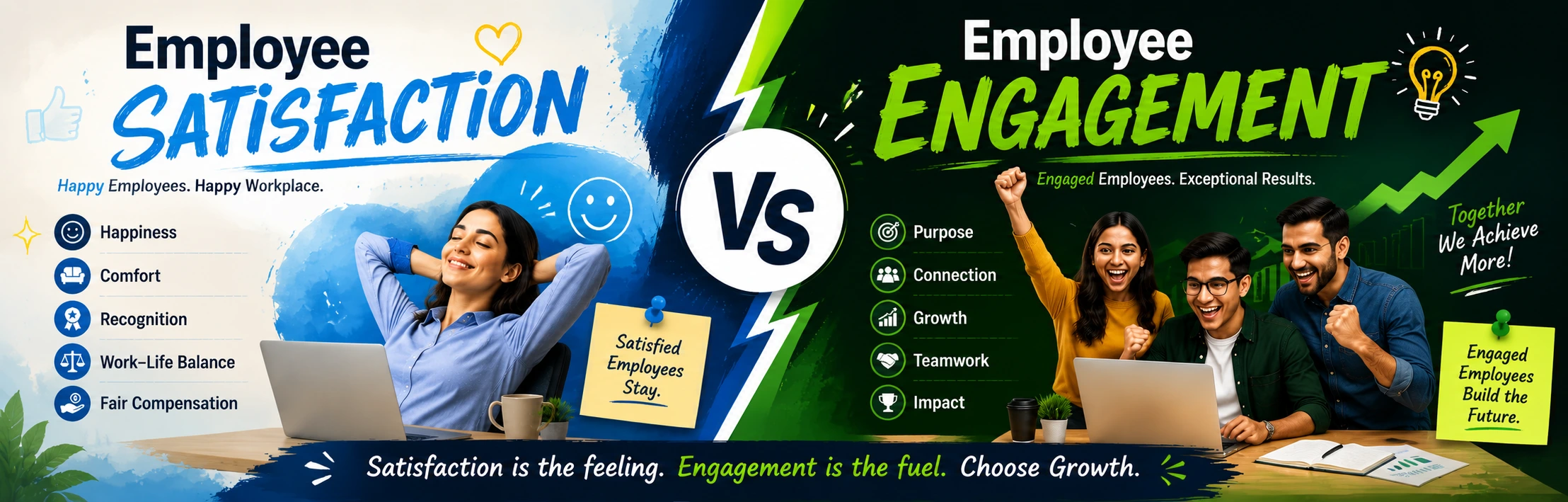
Engagement vs Satisfaction
Employee satisfaction is how content employees feel with their job conditions, such as salary, benefits, workload, flexibility and workplace environment.
Employee engagement is deeper. It measures emotional commitment, discretionary effort, motivation and connection to the organisation’s purpose.
An employee can be satisfied but not engaged. For example, they may like their salary and colleagues but feel no strong motivation to go beyond minimum expectations. Similarly, an engaged employee may care deeply about the mission but feel frustrated by poor systems or leadership inconsistency.
Your employee engagement template should include both satisfaction and engagement signals, but it should not treat them as the same thing.
Culture vs Climate
Culture is the deeper pattern of values, behaviours, norms and decision-making habits that shape how work gets done.
Climate is the current employee experience of that culture. It is how people feel today about trust, workload, communication, leadership, recognition and fairness.
Culture changes slowly. Climate can shift quickly after leadership changes, restructuring, return-to-office decisions, manager exits or rapid growth.
A good culture health check measures both. It asks: “What are the deeper norms?” and “What are employees experiencing right now?”
Measurement vs Transformation
Measurement tells you what is happening. Transformation changes what happens next.
Many organisations run surveys and call it employee listening. But listening without action creates cynicism. Transformation requires prioritisation, ownership, manager enablement, leadership accountability and visible follow-up.
The best employee engagement survey software does not simply collect feedback. It helps HR and leaders move from data to decisions.
Why Employee Feedback Tools Matter
Employee feedback tools matter because leaders cannot manage culture through assumptions. They need structured, timely and credible signals from employees.
In a fast-moving workplace, informal feedback is not enough. Employees may not speak openly in town halls. Managers may filter difficult messages. Exit interviews often arrive too late. HRBPs may sense issues but lack evidence to influence business leaders.
Employee feedback tools solve this by giving organisations a consistent listening architecture. They help leaders detect early warning signs, compare experience across teams, understand sentiment, and respond before disengagement becomes attrition.
For HR leaders, the value is not only in knowing whether engagement is “high” or “low”. The real value is in knowing why.
For example:
A technology team may have high pride but low workload sustainability.
A sales team may have strong recognition but poor psychological safety.
A manufacturing unit may have good manager trust but weak career visibility.
A high-growth Indian startup may have a strong purpose but rising burnout.
A distributed GCC team may have positive flexibility scores but low belonging.
Without a structured employee feedback tool, these patterns remain anecdotal. With one, HR can move from opinion to evidence.
Why Feedback Tools Are Critical in 2026
Feedback tools are critical in 2026 because the workplace has become more complex, distributed and emotionally demanding.
Several shifts are shaping employee experience:
Hybrid work is now a permanent operating model for many knowledge teams.
AI is changing roles, skills and anxieties.
Managers are under pressure to deliver more with leaner teams.
Employees expect flexibility, purpose, inclusion and growth.
Organisations are under pressure to improve productivity while controlling costs.
Retention depends increasingly on manager quality, career clarity and culture consistency.
This is why annual engagement surveys are no longer enough. They are still useful, but they need to be supported by pulse surveys, lifecycle listening, manager dashboards and action planning.
For Indian organisations, there is another layer. India’s talent market is young, competitive and mobile. Employees compare workplace experiences across startups, GCCs, IT services firms, consulting firms, digital businesses and global employers. A slow feedback cycle can quickly become a retention problem.
In 2026, HR teams need faster feedback loops. Not more noise, but better signals.
Why Organisations Need Employee Feedback Tools
Organisations need employee feedback tools because culture is now a measurable business variable. It affects retention, productivity, innovation, customer experience, manager performance and employer brand.
A feedback tool helps answer questions such as:
Which engagement drivers predict attrition in our organisation?
Which managers need support?
Which teams are experiencing burnout?
Are employees aligned with strategy?
Do employees feel safe to speak up?
Are recognition practices consistent?
Are DEI and wellbeing efforts landing?
What should leaders prioritise this quarter?
Without this intelligence, organisations often over-invest in visible but low-impact initiatives: events, perks, one-off wellness sessions, generic training or broad communication campaigns. These may help morale temporarily, but they do not always fix the root causes of disengagement.
A diagnostic-first approach is more effective. It starts with evidence, identifies drivers, prioritises interventions and tracks whether actions are working.
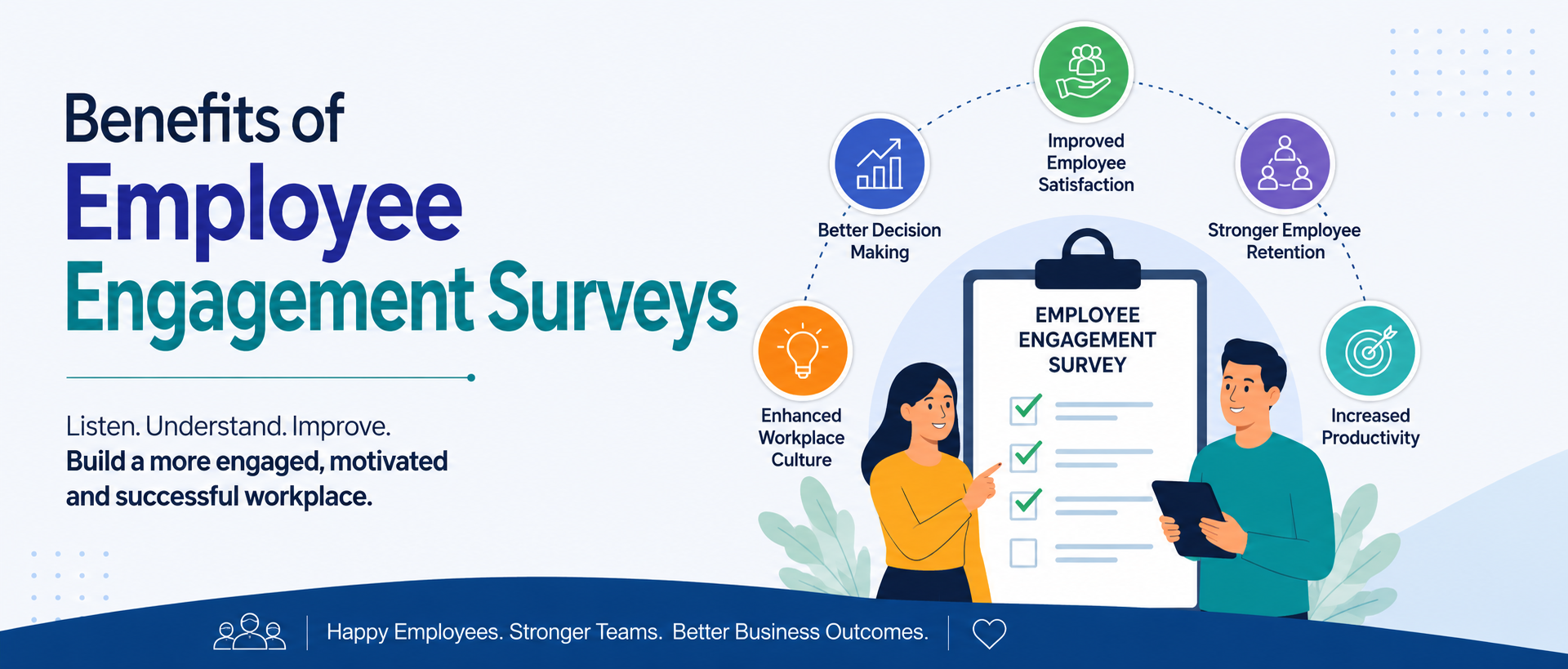
Key Benefits of Employee Feedback Tools
Two-Way Communication
Good feedback tools create a structured channel for employees to be heard and for leaders to respond. This is essential because engagement is not built through one-way announcements. It is built through trust.
Employees want to know three things:
Did you hear us?Did you understand the issue?What will change?
A feedback tool should therefore support communication before, during and after the survey. HR should explain why the survey is being run, how confidentiality works, what leaders will do with the data, and when employees will see outcomes.
The practical move: publish a short “you said, we heard, we are doing” update after every major survey cycle.
The takeaway: communication closes the trust loop.
Real-Time Sentiment Insight
Real-time sentiment insight helps HR detect shifts before they become expensive problems.
For example, after restructuring, a quarterly engagement survey may be too slow. A short pulse survey can reveal whether employees understand the change, trust leadership communication and feel clear about priorities.
Real-time does not mean surveying employees every week without purpose. It means collecting timely feedback at meaningful moments: after onboarding, manager transitions, policy changes, performance cycles, restructuring, mergers, leadership changes or return-to-office decisions.
The practical move: use pulse surveys for moments of change, not as a substitute for leadership conversations.
The takeaway: timely feedback helps leaders respond while the issue is still manageable.
Continuous Performance Improvement
Engagement and performance are connected, but not in a simplistic way. Employees perform well when they have clarity, capability, autonomy, feedback, recognition and manageable workload.
Employee feedback tools help identify performance blockers. These may include unclear goals, slow decision-making, poor collaboration, weak manager coaching, lack of tools, or low psychological safety.
A good survey should not ask only “Are you engaged?” It should ask what enables or prevents performance.
The practical move: connect engagement questions with performance enablers such as role clarity, decision speed, manager feedback and collaboration quality.
The takeaway: engagement data becomes more valuable when it explains performance friction.
Engagement and Retention
Retention is not solved at the exit interview stage. It is shaped by everyday experience.
Employee feedback tools help identify stay factors and leave risks. Common drivers include manager relationship, career growth, recognition, fairness, workload, compensation perception, belonging and trust in leadership.
For Indian talent markets, retention can vary by career stage. Early-career employees may prioritise growth and mentorship. Mid-career employees may prioritise flexibility, manager quality and career mobility. Senior employees may prioritise purpose, autonomy and leadership trust.
The practical move: segment survey insights by tenure, level, function and location without compromising anonymity.
The takeaway: retention improves when HR understands what different employee groups need to stay and perform.
Data-Driven People Decisions
People's decisions are often influenced by loud voices, assumptions or isolated escalations. Feedback tools bring balance.
They help HR decide where to invest, which managers to coach, which policies to revisit, which teams need intervention and which culture strengths to scale.
However, data-driven does not mean data-only. Employee comments, focus groups and manager conversations are important contexts. The best approach combines quantitative scores with qualitative insights.
The practical move: use survey scores to identify patterns and employee comments to understand meaning.
The takeaway: good people analytics combines numbers with human judgement.
Recognition Culture
Recognition is one of the most visible signals of culture. It tells employees what the organisation values.
A feedback tool can show whether recognition is frequent, fair and meaningful. It can also reveal whether recognition is concentrated in certain teams, levels or personality types.
Recognition should not be reduced to rewards. It includes manager appreciation, peer recognition, leadership visibility, career opportunities and acknowledgement of effort during difficult periods.
The practical move: ask both “I feel recognised” and “Recognition is fair and consistent in my team.”
The takeaway: recognition culture improves when appreciation becomes specific, timely and inclusive.
Manager-Employee Alignment
Managers are the daily carriers of culture. They translate strategy into priorities, feedback, recognition, psychological safety and performance expectations.
Feedback tools help HR understand manager effectiveness at scale. They can highlight where managers need support in communication, coaching, inclusion, workload planning or conflict resolution.
This should not become a punitive exercise. Manager dashboards should be used for development and accountability, not blame.
The practical move: provide managers with simple team-level insights and guided action planning.
The takeaway: engagement improves when managers are equipped to act, not merely measured.
Core Features of Top Employee Feedback Tools
Pulse and Continuous Feedback Surveys
Pulse surveys are short, focused surveys used to track specific themes over time. They are useful for monitoring change, testing interventions and keeping a regular listening rhythm.
The best pulse surveys are brief, intentional and linked to action. A monthly pulse with three to five questions can be more effective than a long survey that no one acts on.
Anonymous Feedback Collection
Anonymity is essential for honest feedback, especially in hierarchical or high-power-distance cultures. Employees are more likely to share difficult truths when they trust the process.
For Indian, SEA and MENA teams, anonymity and confidentiality should be explained clearly. HR should specify minimum reporting thresholds and avoid cutting data so narrowly that individuals can be identified.
Real-Time Analytics and Reporting
Dashboards should help HR and leaders see trends, hotspots, strengths and risk areas quickly. Useful analytics include engagement scores, driver analysis, heatmaps, sentiment themes, participation rates, manager-level views, demographic cuts and open-text analysis.
The goal is not to create more charts. It is to identify what deserves attention.
Integration With HR and Performance Systems
Feedback tools become more powerful when connected with HRIS, performance management, recognition platforms, collaboration tools and learning systems. Integration helps HR understand how engagement relates to tenure, role, team, performance cycles, attrition and mobility.
Customisable Question Libraries
A good tool should offer question libraries but allow customisation. Generic questions may miss business-specific realities.
For example, a GCC in Bengaluru may need questions on global collaboration and time-zone load. A manufacturing firm may need questions on safety, supervisor trust and shift communication. A startup may need questions on role clarity and founder communication.
Actionable Alerts and Follow-Ups
Survey tools should not stop at reporting. They should prompt action. This may include alerts for low-scoring themes, suggested manager actions, follow-up templates, action plan ownership and progress tracking.
Mobile-Friendly Interfaces
Mobile access is especially important for distributed, frontline and on-the-go employees. A free online employee engagement survey may get higher participation if it works smoothly on mobile, loads quickly and keeps questions simple.
How Feedback Tools Support Organisational Growth
Employee feedback tools support growth by helping organisations scale culture deliberately.
In small companies, founders and leaders can sense culture directly. In larger organisations, culture becomes distributed across managers, geographies and functions. Without feedback systems, leadership often discovers issues late.
As organisations grow, feedback tools help maintain:
Clarity during scaleConsistency across teamsTrust during changeManager accountabilityRetention of key talentBetter employee experienceStronger employer brandMore inclusive decision-making
For global teams across India, US, UK, SEA and MENA, feedback tools also help leaders understand cultural nuance. Employees in different regions may respond differently to direct feedback, manager authority, recognition, flexibility and psychological safety. A global survey should be consistent enough to compare and flexible enough to localise.
The takeaway: growth tests culture. Feedback tools help leaders see where culture is scaling well and where it is cracking.
Top 200+ Employee Engagement Survey Templates and Examples HR’s Must Use in 2026
The following question bank can be used to build an employee engagement survey form, sample employee engagement survey form, pulse survey, culture health check, onboarding survey, manager effectiveness survey or retention diagnostic.
Use a 5-point Likert scale for most questions:
- Strongly disagree
- Disagree
- Neutral
- Agree
- Strongly agree
Add open-text questions where deeper context is needed.
A. Core Employee Engagement Questions
- I feel motivated to do my best work.
- I feel proud to work for this organisation.
- I would recommend this organisation as a great place to work.
- I feel emotionally connected to the organisation’s mission.
- I am willing to go beyond my basic job responsibilities when needed.
- My work gives me a sense of purpose.
- I feel energised by the work I do.
- I see myself working here over the next 12 months.
- I believe this organisation is a good place to build my career.
- Overall, I feel engaged at work.
B. Purpose and Strategy Alignment
- I understand the organisation’s strategic priorities.
- I know how my work contributes to business goals.
- Leaders communicate the organisation’s direction clearly.
- My team’s goals are aligned with company priorities.
- I understand what success looks like in my role.
- I can explain how my work creates value for customers or stakeholders.
- I believe the organisation is moving in the right direction.
- Strategic changes are communicated in a timely manner.
- I understand why major decisions are made.
- My priorities are clear.
C. Role Clarity and Enablement
- I have clarity on my responsibilities.
- I have the resources needed to do my job well.
- I have access to the tools and systems I need.
- Processes help me work effectively.
- I know who to go to when I need support.
- Decision-making is clear in my team.
- I am empowered to make decisions appropriate to my role.
- I receive the information I need to perform well.
- I can manage my work without unnecessary blockers.
- My workload allows me to maintain quality.
D. Manager Effectiveness
- My manager sets clear expectations.
- My manager gives useful feedback.
- My manager recognises good work.
- My manager supports my development.
- My manager listens to my concerns.
- My manager treats team members fairly.
- My manager helps remove blockers.
- My manager communicates changes clearly.
- My manager creates a safe environment for discussion.
- I trust my manager.
E. Leadership Trust
- I trust senior leaders to make good decisions.
- Leaders act in line with the organisation’s values.
- Leaders communicate honestly, even when the message is difficult.
- Leaders are visible and accessible.
- Leaders take employee feedback seriously.
- Leaders explain the reasons behind major changes.
- I believe leaders care about employees.
- Leaders are accountable for culture.
- Leadership decisions are consistent with stated priorities.
- I have confidence in the future of the organisation.
F. Recognition and Appreciation
- I feel appreciated for the work I do.
- Recognition is timely in my team.
- Recognition is fair and inclusive.
- My manager notices meaningful contributions.
- Peer recognition is encouraged.
- Good performance is celebrated.
- Effort during difficult periods is acknowledged.
- Recognition is linked to behaviours we value.
- I understand what kinds of contributions are recognised.
- Recognition here feels genuine.
G. Growth and Career Development
- I have opportunities to learn new skills.
- I can see a future career path here.
- My manager discusses my career goals with me.
- I receive support for professional development.
- Internal mobility opportunities are visible.
- Promotions are based on fair criteria.
- I have access to learning resources.
- I am encouraged to take on stretch assignments.
- I receive feedback that helps me grow.
- I believe my career can progress in this organisation.
H. Performance and Feedback
- I receive regular feedback on my performance.
- Performance expectations are clear.
- Performance reviews are fair.
- Goals are realistic and meaningful.
- I understand how my performance is evaluated.
- Feedback conversations help me improve.
- High performance is recognised appropriately.
- Poor performance is addressed constructively.
- My performance goals connect to team goals.
- I feel supported to deliver high-quality work.
I. Collaboration and Teamwork
- My team collaborates effectively.
- People in my team help each other succeed.
- Cross-functional collaboration works well.
- Information flows smoothly between teams.
- Conflicts are handled respectfully.
- Team meetings are useful and focused.
- We make decisions efficiently.
- My team has a healthy working rhythm.
- People share knowledge openly.
- Collaboration tools help us work better.
J. Psychological Safety and Voice
- I feel safe speaking up.
- I can challenge ideas respectfully.
- Mistakes are treated as opportunities to learn.
- Employees can raise concerns without fear.
- Different opinions are welcomed.
- My ideas are taken seriously.
- I can be honest with my manager.
- Leaders encourage open dialogue.
- I believe feedback leads to action.
- I feel heard at work.
K. Wellbeing and Workload
- My workload is manageable.
- I can maintain a healthy work-life balance.
- I have flexibility when needed.
- Work stress is manageable.
- The organisation supports employee wellbeing.
- I can disconnect from work outside working hours when appropriate.
- My team has realistic deadlines.
- I feel comfortable discussing workload concerns.
- The pace of work is sustainable.
- I have the energy to do my best work.
L. Inclusion, Belonging and DEI
- I feel respected at work.
- I feel a sense of belonging.
- People from different backgrounds are treated fairly.
- I can be myself at work.
- Diverse perspectives are valued.
- Decisions are made fairly.
- Opportunities are accessible to people across backgrounds.
- I have not experienced exclusionary behaviour at work.
- Leaders demonstrate commitment to inclusion.
- My workplace is welcoming to different identities and experiences.
M. Culture and Values
- The organisation’s values are clear.
- People behave in line with our stated values.
- Our culture supports high performance.
- Our culture supports ethical decision-making.
- Our culture encourages learning.
- Our culture supports collaboration.
- Our culture supports innovation.
- Our culture supports customer focus.
- Our culture is consistent across teams.
- I see our values reflected in everyday decisions.
N. Communication
- Communication in the organisation is clear.
- I receive important updates on time.
- My manager communicates priorities effectively.
- Senior leaders communicate in a transparent way.
- I know where to find information.
- Communication between teams is effective.
- Changes are explained well.
- Communication is two-way, not only top-down.
- I feel informed about decisions affecting my work.
- Communication channels are easy to use.
O. Change and Agility
- The organisation manages change effectively.
- I understand why changes are happening.
- I receive enough support during change.
- My team adapts well to new priorities.
- Leaders listen to employee concerns during change.
- Change communication is timely.
- I feel confident navigating change.
- The organisation learns from change initiatives.
- Employees are involved in changes that affect them.
- Change is managed with empathy.
P. Innovation and Continuous Improvement
- I am encouraged to suggest improvements.
- New ideas are welcomed.
- The organisation learns from failures.
- We continuously improve how we work.
- I have time to think creatively.
- Innovation is supported by leadership.
- Employees are trusted to experiment responsibly.
- Good ideas can come from any level.
- We act on improvement suggestions.
- Our systems support innovation.
Q. Customer and Business Connection
- I understand our customers’ needs.
- My work helps improve customer experience.
- Teams collaborate to solve customer problems.
- Customer feedback is shared with employees.
- Business goals are connected to employee goals.
- I understand how my role affects business outcomes.
- We balance customer needs with employee wellbeing.
- The organisation makes decisions that support long-term value.
- Employees are encouraged to think commercially.
- We celebrate customer impact.
R. Remote, Hybrid and Distributed Work
- I can work effectively in my current work model.
- Hybrid work expectations are clear.
- Remote employees are included in team decisions.
- Time-zone differences are managed respectfully.
- Meetings are scheduled with consideration for distributed teams.
- I have equal access to information regardless of location.
- Flexible work does not negatively affect career growth.
- My manager supports effective hybrid working.
- Our team uses digital tools well.
- I feel connected to colleagues despite location differences.
S. India-Focused Workplace Experience
- I feel the organisation understands the expectations of employees in India.
- Career growth opportunities are clearly communicated.
- Managers balance performance expectations with empathy.
- Workplace policies are practical for Indian employees and families.
- Communication works well across regional offices.
- Employees in different Indian locations have fair access to opportunities.
- Recognition is not limited to head-office teams.
- Leaders understand local cultural nuances.
- Flexible work policies are applied fairly.
- Employees feel comfortable sharing honest feedback.
T. Retention and Stay Factors
- I see strong reasons to stay with this organisation.
- I feel my skills are being used well.
- I am fairly rewarded for my contribution.
- I believe my work is meaningful.
- I have a good relationship with my manager.
- I feel connected to my team.
- I feel optimistic about my future here.
- I would consider internal opportunities before looking outside.
- The organisation provides a compelling employee experience.
- I am unlikely to leave in the next six months.
U. Open-Text Questions
- What is one thing that helps you do your best work here?
- What is one thing that gets in the way of your best work?
- What should leaders continue doing?
- What should leaders stop doing?
- What should leaders start doing?
- What would make this a better place to work?
- What is one improvement your team needs?
- What recognition or support would feel most meaningful to you?
- What would make you more likely to stay?
- Is there anything else you want HR or leadership to know?
Sample Employee Engagement Survey Form
Here is a practical sample employee engagement survey form HR teams can adapt.
Survey Introduction
We are running this survey to understand employee experience, engagement and culture across the organisation. Your feedback will help us identify what is working well and where we need to improve. Responses will be reviewed in aggregate. Please answer honestly.
Section 1: Engagement
- I feel motivated to do my best work.
- I feel proud to work here.
- I would recommend this organisation as a great place to work.
- I see myself working here over the next 12 months.
Section 2: Manager and Team
- My manager sets clear expectations.
- My manager listens to my concerns.
- My team collaborates effectively.
- I feel safe speaking up in my team.
Section 3: Growth and Recognition
- I have opportunities to learn and grow.
- I feel recognised for my contribution.
- Promotions and opportunities are fair.
- I receive feedback that helps me improve.
Section 4: Wellbeing and Workload
- My workload is manageable.
- I can maintain a healthy work-life balance.
- I feel supported during stressful periods.
Section 5: Culture and Leadership
- Leaders communicate clearly.
- Leaders act in line with company values.
- I believe feedback from this survey will lead to action.
Section 6: Open Feedback
- What is working well?
- What should we improve first?
- What is one action that would improve your experience at work?
This sample employee engagement survey form is short enough for high participation and broad enough to identify key drivers. For deeper diagnostics, HR can add modules on DEI, manager effectiveness, wellbeing, change readiness or hybrid work.
Pulse Survey vs Engagement Survey
A pulse survey is a short, frequent survey that tracks a specific theme or trend. An engagement survey is a broader diagnostic survey that measures multiple drivers of employee engagement.
The best approach is not pulse survey vs engagement survey. It is a pulse survey plus engagement survey.
Use the engagement survey to understand the full picture. Use pulse surveys to monitor the most important themes and track whether action is working.
Metrics That Matter: How to Read Survey Data
Survey scores are useful, but they are not the full story. HR teams should focus on metrics that reveal both experience and actionability.
1. Participation Rate
Participation shows whether employees trust the process enough to respond. Low participation may signal survey fatigue, fear, indifference or poor communication.
2. Engagement Index
An engagement index combines core engagement questions such as pride, motivation, advocacy, intent to stay and discretionary effort.
3. eNPS
Employee Net Promoter Score asks how likely employees are to recommend the organisation as a place to work. It is simple and useful, but it should not be treated as a complete engagement measure.
4. Driver Scores
Driver scores show what influences engagement. Common drivers include manager quality, recognition, growth, workload, leadership trust and belonging.
5. Heatmaps
Heatmaps help compare themes across departments, locations, tenure groups and levels while maintaining anonymity.
6. Sentiment Themes
Open-text comments reveal the “why” behind the score. Text analytics can identify recurring themes such as workload, communication, fairness, career growth or leadership trust.
7. Action Completion
This is the metric many organisations forget. If teams identify actions but do not complete them, survey trust declines.
8. Movement Over Time
The most important question is not “What is our score?” It is “Are we improving in the areas that matter?”
The takeaway: measure fewer things better. Focus on the metrics that help leaders act.
What Most Teams Get Wrong
Most teams do not fail because they ask employees for feedback. They fail because they treat feedback as an event.
Here are the common mistakes:
Running long surveys without clear purpose.
Asking generic questions that do not connect to business priorities.
Over-surveying employees without visible action.
Sharing only positive results with leaders.
Avoiding difficult themes in comments.
Giving managers dashboards without guidance.
Treating engagement as HR’s responsibility alone.
Using averages that hide team-level issues.
Ignoring regional and cultural context.
Launching initiatives before diagnosing root causes.
The fix is simple but disciplined: define the business question, ask fewer but sharper questions, protect anonymity, analyse drivers, prioritise actions, equip managers and communicate progress.
Signal vs Noise: How to Find the Real Culture Story
Employee feedback creates a lot of data. Not all of it is equally important.
Noise is a one-off complaint, a temporary reaction or a low-impact issue. Signal is a recurring pattern that affects trust, performance, retention or culture health.
To separate signal from noise, HR should look for:
Patterns across teams
Repeated themes in comments
Low scores on high-impact drivers
Differences between employee groups
Trends over time
Links to attrition, absenteeism or performance
Themes that employees mention without prompting
For example, if one person mentions workload, it may be an individual. If workload appears across teams, comments and declining wellbeing scores, it is a signal. If high performers in a critical function mention career stagnation, it is a retention risk. If new joiners score onboarding poorly, it is an experience design issue.
Culture analytics should help HR identify signals quickly. The goal is not to react to every comment. It is to understand what the organisation must address.
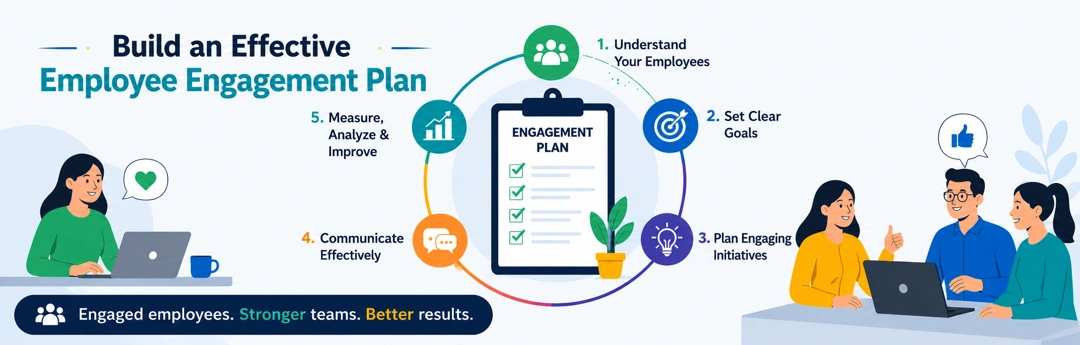
From Insight to Action: A Practical HR Framework
The best employee listening programmes follow a clear action rhythm.
Step 1: Define
Start with the purpose. Are you measuring engagement, culture health, manager effectiveness, change readiness, wellbeing, retention or DEI?
A vague survey produces vague action. A clear diagnostic question produces sharper insights.
Step 2: Listen
Choose the right survey type. Use a comprehensive engagement survey for a broad diagnosis. Use pulse surveys for focused follow-up. Use lifecycle surveys for onboarding, exits and transitions.
Step 3: Analyse
Look beyond averages. Analyse by driver, team, tenure, location and role type while protecting anonymity. Combine scores with comments.
Step 4: Prioritise
Do not try to fix everything. Choose two or three priorities with high impact and reasonable feasibility.
Step 5: Act
Assign owners, timelines and success measures. Give managers practical playbooks, not just dashboards.
Step 6: Communicate
Tell employees what was heard and what will happen. Be honest about what cannot be changed immediately.
Step 7: Track
Use pulse surveys and business metrics to track progress. Review action completion regularly.
The takeaway: insight without action reduces trust. Action without insight wastes effort.
Examples of Employee Feedback Tools and Platforms Worth Considering in 2026
The following brands are worth considering as part of an employee feedback or engagement technology evaluation. This is not a ranking, endorsement or legal comparison. The right choice depends on organisation size, geography, budget, HR maturity, integration needs and whether the organisation needs simple surveys or deeper culture intelligence.
Enculture
Enculture is a culture intelligence platform designed for organisations that want to move beyond survey collection into diagnostics, culture analytics and action. It is especially relevant for HR leaders who need to understand culture health, engagement drivers, employee sentiment, manager effectiveness and retention risks across teams.
Key features to look at include:
Culture diagnostics
Engagement and pulse surveys
Culture analytics
Insight-to-action workflows
Employee listening
Manager and leadership insights
Focus on measurable culture outcomes
Enculture is a good fit for teams that want a diagnostic-first and outcome-driven approach rather than a generic form-based survey process.
Qualtrics EmployeeXM
Qualtrics is a well-known experience management platform used by large organisations for employee experience, engagement, lifecycle feedback and analytics.
Key features often associated with platforms in this category include advanced survey design, dashboards, benchmarks, lifecycle listening and analytics.
Culture Amp
Culture Amp is known for employee engagement, performance and development use cases. It is often considered by companies looking for engagement surveys, benchmarks and manager enablement.
Workday Peakon Employee Voice
Workday Peakon Employee Voice is used by organisations that want continuous listening, engagement analytics and integration with broader HR systems.
Microsoft Viva Glint
Microsoft Viva Glint is relevant for organisations invested in the Microsoft ecosystem and looking for employee engagement, manager insights and organisational listening.
SurveyMonkey
SurveyMonkey is useful for teams that need quick survey creation, templates and simple feedback collection. It can be suitable for early-stage or lightweight survey needs.
Leapsome
Leapsome combines engagement surveys with performance, goals, learning and people enablement features. It may be useful for organisations that want engagement connected with performance and development workflows.
15Five
15Five is often considered by organisations looking for engagement, check-ins, performance management and manager enablement.
Officevibe
Officevibe is commonly used for pulse surveys, team engagement and manager-focused feedback.
Lattice
Lattice is known for performance management, engagement and employee development workflows.
Again, this is not a ranking. These are categories and brands HR teams may evaluate. For Enculture’s audience, the central question should be: do we need a simple survey tool, or do we need culture intelligence that helps us diagnose, prioritise and act?
Tool Comparison Table
How to Compare Employee Feedback Tools
When comparing employee feedback tools, do not start with feature lists. Start with the decision you need the tool to support.
Ask these questions:
Do we need annual engagement measurement or continuous listening?
Do we need anonymous feedback?
Do we need culture analytics or basic reporting?
Do managers need action plans?
Do we need India-specific or global segmentation?
Do we need integrations with HRIS, Slack, Teams or performance systems?
Do we need multilingual capability?
Do we need lifecycle surveys?
Do we need AI comment analysis?
Do we need benchmarks?
Do we have the internal capability to act on insights?
A simple tool may be enough for a small team running a first survey. A larger organisation with multiple locations, hybrid teams and retention challenges needs deeper analytics and action workflows.
The best employee engagement survey software should help HR answer “what now?” after the results come in.
Key Factors to Consider Before Choosing a Tool
1. Diagnostic Depth
Can the tool identify drivers of engagement, or does it only show scores?
2. Ease of Use
Will employees complete the survey easily? Can HR launch surveys without heavy admin effort?
3. Confidentiality and Trust
Does the tool support anonymity thresholds, secure reporting and clear access controls?
4. Action Planning
Can managers and leaders create, assign and track actions?
5. Analytics Quality
Can HR view trends, segments, heatmaps and sentiment themes?
6. Customisation
Can the survey reflect your organisation’s language, culture and priorities?
7. Integration
Can it connect with HR systems, collaboration tools and performance workflows?
8. Scalability
Will it work across India, US, UK, SEA and MENA teams?
9. Support and Advisory
Does the vendor provide guidance on survey design, interpretation and action?
10. Fit With HR Maturity
A sophisticated tool will not create impact if the organisation is not ready to act. Choose a platform that fits your current maturity and future ambition.
Implementation and Adoption Best Practices
A tool succeeds only when employees trust it and leaders use it.
Start With Leadership Alignment
Before launching a survey, align leaders on purpose, confidentiality, reporting and action expectations. If leaders are not ready to hear difficult feedback, delay the survey and prepare them first.
Keep the First Survey Focused
Do not ask 80 questions because every stakeholder wants something included. Start with the core drivers of engagement and add modules only where needed.
Communicate Clearly
Employees should know why the survey matters, how long it will take, whether responses are anonymous and when results will be shared.
Protect Confidentiality
Set minimum group sizes for reporting. Avoid slicing data too narrowly. Be especially careful in small teams or senior leadership groups.
Equip Managers
Managers need help interpreting data. Provide simple guides, conversation prompts and action planning templates.
Close the Loop
Share results and actions. Even if some issues cannot be solved immediately, explain what will happen next.
Track Progress
Use pulse surveys to monitor priority areas. Do not wait a full year to know whether action is working.
Build a Listening Calendar
A practical annual listening calendar may include:
Annual engagement survey
Quarterly pulse surveys
Onboarding survey at 30 and 90 days
Exit survey
Manager effectiveness survey
Wellbeing pulse during high-pressure periods
Culture health check during major change
The takeaway: adoption improves when feedback becomes a rhythm, not an HR campaign.
Regional Guidance for India, US, UK, SEA and MENA Teams
Global organisations need consistent measurement with local sensitivity.
India
In India, career growth, manager quality, recognition, fairness, flexibility and family-aware policies often influence employee experience strongly. Employees may hesitate to give direct negative feedback unless anonymity is trusted. HR should communicate confidentiality clearly and offer mobile-friendly surveys.
For Indian teams, include questions on career visibility, manager support, workload sustainability, hybrid fairness, recognition across locations and growth opportunities.
US
US teams may place strong emphasis on autonomy, wellbeing, inclusion, transparency and career mobility. Feedback tools should capture psychological safety, manager trust and workload sustainability.
UK
UK teams may be particularly attentive to wellbeing, fairness, inclusion, flexibility and leadership transparency. Survey language should be direct but not overly dramatic.
SEA
SEA teams require sensitivity to hierarchy, indirect communication styles and local cultural norms. Anonymous feedback and careful interpretation of neutral responses are important.
MENA
In MENA, relationship-based leadership, trust, respect, recognition and clarity can be significant engagement factors. Organisations should consider multilingual access and local norms around authority and feedback.
Across all regions, avoid assuming that one global score tells the whole story. Culture intelligence requires context.
Where Enculture Fits in a Modern Culture Intelligence Stack
After organisations have collected basic engagement data, the harder question begins: what does this feedback really mean, and what should leaders do next?
This is where Enculture is relevant.
Enculture is best understood as a culture intelligence platform, not merely an employee engagement survey form. Its value lies in helping organisations diagnose culture, identify meaningful signals, connect insights to action and track culture outcomes over time.
For HR leaders, this matters because culture work often fails in the gap between insight and action. A survey may show low trust, weak recognition or manager inconsistency. But leaders still need to know where the issue is concentrated, which drivers matter most, what action should be prioritised and how progress will be measured.
Enculture’s positioning is particularly useful for organisations that want to:
Run engagement diagnostics
Measure culture health
Identify people and culture risks
Understand employee sentiment
Support managers with action-oriented insights
Improve retention and performance through culture
Build a stronger employee listening rhythm
Move from generic surveys to culture analytics
The point is not that every organisation needs the most complex tool immediately. The point is that mature HR teams increasingly need a system that connects listening, interpretation and action.
If a free online employee engagement survey helps you start listening, use it. But if your goal is to improve culture, retention, manager effectiveness and performance at scale, you need a more diagnostic and outcome-driven approach.
Final Thoughts
The strongest employee engagement template is not the longest one. It is the one that helps leaders understand what employees need to do their best work and what the organisation must change to make that possible.
In 2026, HR teams need to move beyond survey administration. They need culture intelligence, engagement diagnostics, people analytics and action discipline. They need to know the difference between satisfaction and engagement, culture and climate, measurement and transformation.
Use the 200+ employee engagement survey templates and examples in this guide as a starting point. Build a survey that reflects your business, your people and your culture. Keep it clear. Protect anonymity. Analyse the real drivers. Equip managers. Close the loop.
Most importantly, do not ask for feedback unless you are prepared to act.
For organisations in India and global teams across the US, UK, SEA and MENA, the opportunity is clear: employee listening can become a strategic advantage when it is continuous, contextual and connected to action. Enculture fits naturally into this shift by helping HR and leadership teams move from feedback collection to culture intelligence and measurable improvement.
FAQs
What is an employee engagement template?
An employee engagement template is a structured set of survey questions used to measure employee motivation, commitment, trust, recognition, growth, wellbeing and alignment with organisational goals. A good template helps HR diagnose engagement drivers and decide what action to take.
What should an employee engagement survey form include?
An employee engagement survey form should include questions on purpose, manager effectiveness, leadership trust, recognition, growth, wellbeing, inclusion, communication, culture and intent to stay. It should also include open-text questions so employees can explain their experience in their own words.
Can I use a free online employee engagement survey?
Yes, a free online employee engagement survey can be useful for small teams or first-time surveys. However, growing organisations usually need deeper analytics, anonymity controls, segmentation, action planning and culture intelligence to turn feedback into improvement.
What is a sample employee engagement survey form?
A sample employee engagement survey form typically includes 15–25 questions across engagement, manager support, recognition, growth, workload, culture and leadership communication. It should be short, clear and easy to complete.
How often should companies run employee engagement surveys?
Most organisations should run a comprehensive engagement survey once or twice a year and use shorter pulse surveys quarterly or during major changes. The right frequency depends on business context, employee trust and the organisation’s ability to act on results.
What is the difference between pulse surveys and engagement surveys?
A pulse survey is short and frequent, usually focused on one theme. An engagement survey is broader and diagnoses multiple drivers of engagement. Pulse surveys track movement; engagement surveys explain the bigger picture.
What are the best employee engagement survey questions?
The best questions are specific, actionable and linked to engagement drivers. Examples include “I understand how my work contributes to business goals,” “My manager gives useful feedback,” “I feel recognised for my contribution,” and “I believe leaders will act on feedback.”
How do employee feedback tools improve retention?
Employee feedback tools improve retention by identifying the issues that make people leave, such as poor manager relationships, lack of growth, low recognition, unfairness, burnout or weak leadership trust. HR can then act before employees disengage or resign.
How do you measure culture?
Culture can be measured through employee surveys, behavioural indicators, leadership assessments, values alignment, open-text sentiment, retention patterns, psychological safety, recognition data and manager effectiveness scores. The aim is to understand how work actually gets done.
What is cultural intelligence?
Culture intelligence is the ability to measure, interpret and act on signals about organisational culture. It combines employee listening, culture analytics, engagement diagnostics and action planning to help leaders improve trust, performance and retention.
How can HR improve engagement in India?
HR teams in India can improve engagement by focusing on career growth, manager capability, recognition, flexibility, fair opportunity, wellbeing and transparent communication. Anonymous feedback and mobile-friendly survey access are especially important for honest participation.
Where does Enculture help?
Enculture helps organisations move beyond basic surveys by providing culture diagnostics, employee listening, culture analytics and insight-to-action workflows. It is designed for HR and leadership teams that want to understand culture health and improve engagement, retention and performance through evidence-based action.
From mental health support to career development opportunities, this checklist ensures you're not missing critical elements that impact employee satisfaction. Includes assessment criteria, scoring guidelines, and prioritization framework to turn insights into action.
Get Free AccessRead Our Other Blogs

See what our customers are saying
Implementation was handled well. Their team guided us and helped in resolving the challenges. We were able to gather insights that identified cultural risk factors..


See what our customers are saying
What impresses me most is how intuitive the platform is. Our teams quickly embraced the tools, resulting in a very high survey completion rate. The actionable data has driven tangible improvements company-wide. We are happy to explore other offerings from the platform.
Access exclusive resources today
Frequently asked questions
Explore our frequently asked questions to learn more about Enculture’s features, security, integration capabilities, and more

Enculture combines strategic HR consulting expertise with advanced technology to provide a consultative approach rather than a purely product-led experience. This tailored method ensures that our solutions are specifically aligned with each company’s unique culture and objectives.
Through in-depth analytics and sentiment tracking, our platform can highlight areas where employees may be disengaged or dissatisfied, enabling proactive action. Identifying these risks early helps prevent issues like increased turnover or declining productivity.
We turn data into clear, practical steps. Enculture provides HR leaders with data-driven recommendations and dashboards that pinpoint where to focus efforts, enabling organizations to act on survey feedback effectively.
Our platform offers highly customizable survey templates and tools, allowing HR teams to tailor questions to their unique organizational needs and goals. This flexibility ensures that the insights are relevant and actionable for your specific workplace environment.
Enculture is designed to scale with your organization. As your culture and engagement needs evolve, our platform’s flexibility and customization options allow it to adapt seamlessly to new challenges and goals.
.svg)